

-
#ftmadison_link/sites/fcx/files/images/operations/modal-bgs/2026_operations_modal_fort_madison.jpg
NORTH AMERICA
Fort Madison, Iowa
Downstream
Description
The Fort Madison facility is the world’s largest and highest quality producer of lubricant grade molybdenum disulfide, sublimed pure molybdic oxide, calcined pure molybdic oxide, ammonium dimolybdate, ammonium heptamolybdate, ammonium octamolybdate, and sodium molybdate.
Did you know?
Fort Madison is dedicated to being the highest quality producer in the world and a strong member of the Climax global production team. The efforts to meet or exceed customer requirements have been a prime focus for the high purity products from this location. The efforts and dedication resulted in many customer quality awards.
Since 1993, the plant has been certified to the ISO 9001 International Quality Standard. In 2006, the Fort Madison Management System received certification to the ISO 14001 International Environmental Standard and to the OHSAS 18001 Health and Safety Standard, which was transferred to ISO 45001 in 2021. The plant has been awarded the Molybdenum Mark for responsible production in 2023.
Location
The Ft. Madison molybdenum conversion plant is located in Lee County, Iowa approximately 100 west of Peoria, Illinois.
Background
The Fort Madison chemical plant, operational since late 1977, is an important companion to other conversion and operating facilities of Climax Molybdenum Company. The plant was expanded in 1995, maintaining its status as the largest facility of its type in the world.
A key function of this chemical facility is to supplement the growing family of molybdenum products required for many new applications warranted by the technological merits of molybdenum.
Ownership
100% by Climax Molybdenum, a Freeport-McMoRan company.

ADDITIONAL INFORMATION
1650PREVIOUSEL PASO/operations/united_states#elpaso_link -
#elpaso_link/sites/fcx/files/2026-07/2026_operations_modal_elpaso.jpg
NORTH AMERICA
El Paso, Texas
Downstream
Description
Our rod and refining plant in El Paso, Texas, is a key contributor to our ranking as one of the world’s largest manufacturers of continuous cast copper rod, a main material used in the manufacturing of wire and cable products. The El Paso refinery has the potential to operate at an annual production capacity of about 900 million pounds of copper cathode, which is sufficient to refine all of the copper anode we produce at our Miami, Arizona operation. Our El Paso refinery also produces nickel carbonate, copper telluride and autoclaved slimes material containing gold, silver, platinum and palladium.
Did you know?
The majority of the copper produced at our U.S. copper mines and refined in our El Paso, Texas refinery is consumed at our rod plants to produce copper rod, which is then sold to wire and cable manufacturers. The remainder of our U.S. copper production is sold in the form of copper cathode or copper concentrate under U.S. dollar-denominated annual contracts. Generally, copper cathode is sold to rod, brass or tube fabricators. Cathode and rod contract prices are generally based on the COMEX monthly average settlement prices for the month of shipment and include a premium.
Location
The Copper Refinery and Rod Mill is located in east-central El Paso, which is in the far western corner of Texas near the U.S.-Mexico border and the Rio Grande River.
Background
Originally developed by Phelps Dodge, the facility became part of Freeport-McMoRan following its acquisition of Phelps Dodge in 2007.
Ownership
100%
ADDITIONAL INFORMATION
El Paso, Miami Recently Awarded Copper Mark | Freeport-McMoRan
1450PREVIOUSCLIMAX/operations/united_states#climax_linkNEXTFORT MADISON/operations/united_states#ftmadison_link -
#morenci_link/sites/fcx/files/images/operations/modal-bgs/2026_operations_modals_morenci2.jpg
NORTH AMERICA
MORENCI MINE LOCATED IN ARIZONA
Upstream
Description
Morenci is an open-pit copper mining complex that has been in continuous operation since 1939 and previously was mined through underground workings.
Did you know?
The Morenci mill expansion project, which achieved full rates in second-quarter 2015, expanded mill capacity from 50,000 metric tons of ore per day to approximately 115,000 metric tons of ore per day, which results in incremental annual production of approximately 225 million pounds of copper and an improvement in Morenci's cost structure.
Location
Greenlee County, Arizona, approximately 50 miles northeast of Safford on U.S. Highway 191.
Ores
The Morenci mine is a porphyry copper deposit that has oxide, secondary sulfide mineralization, and primary sulfide mineralization. The predominant oxide copper mineral is chrysocolla. Chalcocite is the most important secondary copper sulfide mineral and chalcopyrite the dominant primary copper sulfide.
Processes and facilities
The Morenci operation consists of two concentrators capable of milling 132,000 metric tons of ore per day (mtd), which produce copper and molybdenum concentrate; a 72,500 mtd, crushed-ore leach pad and stacking system; a low-grade run-of-mine (ROM) leaching system; four SX plants; and three EW tank houses that produce copper cathode. Total EW tank house capacity is approximately 900 million pounds of copper per year. Morenci’s available mining fleet consists of one hundred and forty-one 235-metric ton haul trucks and three 372 metric-ton haul trucks loaded by 13 shovels with bucket sizes ranging from 47 to 59 cubic meters, which are capable of moving an average of 803,000 metric tons of material per day.
Background
Phelps Dodge & Company invested $50,000 in the property in 1881, marking the New York mercantile’s first venture into mining. Through acquisition, Phelps Dodge & Company consolidated all mining operations in the district by 1921.
Initially underground, Morenci transitioned to open-pit mining beginning in 1937. The operation nearly doubled its production capacity during World War II at the urging of the U.S. government to meet wartime needs. Morenci’s first SX/EW plant was commissioned in 1987. Once home to two smelters, the last smelter ceased operation in 1984. Both have been demolished and reclaimed.
Ownership
72% - Freeport-McMoRan Inc. (undivided interest); 15% - Sumitomo Metal Mining Arizona Inc. (SMMAz is owned 80% by Sumitomo Metal Mining Co. Ltd. (SMM) and 20% by Sumitomo Corporation); and 13% - SMM Morenci Inc. (fully owned by SMM)
VIDEO
Morenci: Deep Roots, Broad Horizons
ADDITIONAL INFORMATION
Impact of Morenci Operations on the Economy of Greenlee County and Arizona
Tailings Dust Management at Morenci
Technical Report Summary of Mineral Reserves and Mineral Resources – Morenci Mine
2050NEXTBAGDAD/operations/north-america#bagdad_link -
#bagdad_link/sites/fcx/files/2026-10/2026_operations_modals_bagdad1.jpg
NORTH AMERICA
BAGDAD MINE LOCATED IN ARIZONA
Upstream
Description
Bagdad is an open-pit copper and molybdenum mining complex.
Did you know?
Bagdad is home to the world’s first commercial-scale concentrate leach processing facility (2003) and one of the longest continuously operating solution extraction/electrowinning (SX/EW) plants in the world (1970). An unincorporated community, Bagdad is one of two FCX “company towns;” the other is Morenci, Arizona.
Location
About 100 miles northwest of Phoenix, Arizona.
Ores
The Bagdad mine is a porphyry copper deposit containing both sulfide and oxide mineralization. Chalcopyrite and molybdenite are the dominant primary sulfides and are the primary economic minerals in the mine. Chalcocite is the most common secondary copper sulfide mineral and the predominant oxide copper minerals are chrysocolla, malachite and azurite.
Processes and facilities
The Bagdad operation consists of an 77,100 metric ton-per-day concentrator that produces copper and molybdenum concentrate, an SX/EW plant that will produce approximately 9 million pounds per year of copper cathode from solution generated by low-grade stockpile leaching, and a pressure-leach plant to process molybdenum concentrate. The available mining fleet consists of 33 autonomous 235-metric-ton haul trucks loaded by 6 electric shovels and 2 loaders with bucket sizes ranging from 30 to 48 cubic meters, which are capable of moving an average of 236,000 metric tons of material per day. Bagdad’s fleet also includes 7 manned haul trucks that are primarily operated for mine development and maintenance activities.
Background
First claims staked in 1882. Property changed ownership numerous times through first half of 20th century. First mill began operation in 1928 to process ore from the underground mine. Transition to open-pit mining began in 1945. A $240 million expansion in 1973 included new haul trucks, shovels, nearly 400 housing units and concentrator.
Ownership
100% FCX
VIDEO
ADDITIONAL INFORMATION
Impact of Bagdad Operations on the Economy of Yavapai County and Arizona
1875PREVIOUSMORENCI/operations/north-america#morenci_linkNEXTSAFFORD/LONE STAR/operations/north-america#safford_link -
#sierrita_link/sites/fcx/files/images/operations/modal-bgs/2026_operations_modal_sierrita2.jpg
NORTH AMERICA
SIERRITA MINE LOCATED IN ARIZONA
Upstream
Description
Sierrita is an open-pit copper and molybdenum mining complex.
Did you know?
In addition to copper and molybdenum, the mine produces rhenium, a rare and highly valued metal.
Location
20 miles southwest of Tucson, Arizona.
Ores
The Sierrita mine is a porphyry copper deposit that has oxide and secondary sulfide mineralization, and primary sulfide mineralization. The predominant oxide copper minerals are malachite, azurite and chrysocolla. Chalcocite is the most important secondary copper sulfide mineral, and chalcopyrite and molybdenite are the dominant primary sulfides.
Processes and facilities
The Sierrita operation includes a 100,000 metric ton-per-day concentrator that produces copper and molybdenum concentrate. Sierrita also produces copper from a ROM oxide-leaching system. Cathode copper is plated at the Twin Buttes EW facility, which has a design capacity of approximately 50 million pounds of copper per year. The Sierrita operation also has molybdenum facilities consisting of a leaching circuit, two molybdenum roasters and a packaging facility. The molybdenum facilities process molybdenum concentrate produced by Sierrita, from our other mines and from third-party sources.
Background
First claims recorded in 1895. First worked as an underground mine beginning in 1907; open-pit development began in 1957. In 2009, FCX purchased the Twin Buttes copper mine, which ceased operations in 1994 and is adjacent to the Sierrita mine. The purchase provides significant synergies in the Sierrita minerals district, including the potential for expanded mining activities and access to material that can be used for Sierrita tailings and stockpile reclamation purposes.
Ownership
100% FCX
VIDEO
ADDITIONAL INFORMATION
Impact of Sierrita Operations on the Economy of Pima County and Arizona
1725PREVIOUSSAFFORD/LONE STAR/operations/north-america#safford_linkNEXTMIAMI/operations/north-america#miami_link -
#miami_link/sites/fcx/files/images/operations/modal-bgs/2026_operations_modals_miami3.jpg
NORTH AMERICA
MIAMI MINE LOCATED IN ARIZONA
Upstream | Downstream
Description
Miami includes an open-pit copper mine, a smelter and a rod mill.
Location
90 miles east of Phoenix, in the heart of Arizona’s historic Globe-Miami mining district.
Did you know?
The Miami mine historically had been the major copper producer in the Globe-Miami mining area, one of America’s premier copper mining districts.
Ores
The Miami mine is a porphyry copper deposit that has leachable oxide and secondary sulfide mineralization. The predominant oxide copper minerals are chrysocolla, copper-bearing clays, malachite and azurite. Chalcocite and covellite are the most important secondary copper sulfide minerals.
Processes and facilities
Since about 1915, the Miami mining operation had processed copper ore using both flotation and leaching technologies. The design capacity of the SX/EW plant is 200 million pounds of copper per year. Miami is no longer mining ore, but currently produces copper through leaching material already placed on stockpiles.
Background
The first prospecting expeditions visited the area in the 1860s. Copper was mined underground until after World War II, when the first open-pit mining began. Miami was among the first to employ “vat leaching” (1926) and precipitation plants to recover oxide minerals. It did this in conjunction with its flotation concentrator, which processed sulfide minerals. The plant’s smelter was modernized in 1974 to meet Clean Air Act standards and further modernized and expanded in 1992. The success of an SX/EW plant commissioned in 1979 led to the demise of vat leaching by the mid-1980s and ultimately the concentrator in 1986. The rod mill was commissioned in 1966 and the refinery in 1993 (the refinery was permanently closed in 2005).
Ownership
100%
Smelter
Type
IsaSmelt™ technology (primary furnace) and ELKEM electric furnace (secondary); four Hoboken style converters, two oxygen plants; and an acid plant treating all process gases.
Did you know?
The Miami smelter processes copper concentrate primarily from FCX’s Arizona copper mines. In addition, because sulphuric acid is a by-product of smelting concentrates, the Miami smelter is also the most significant source of sulphuric acid for FCX’s North America leaching operations. In addition to copper concentrates, the smelter also recycles inorganic metal-bearing waste typically produced by high technology industries, extending the useful life of valuable metals and reducing disposal of metal-bearing waste in landfills. Copper and other precious metals are extracted during this process.
Ownership
100%
Rod Mill
Product
Continuous-cast copper rod.
Did you know?
Completed in 1969 and the first of its kind to be located at a mine site. The plant uses the Southwire design casting system with Morgan mills to produce 7,500-pound and 15,000-pound copper rod coils.
Production
The Miami rod mill treats cathodes from the Miami mine and our other North America copper mines.
Ownership
100%
VIDEO
ADDITIONAL INFORMATION
Impact of Miami Operations on the Economy of Gila County and Arizona
2225PREVIOUSSIERRITA/operations/north-america#sierrita_linkNEXTCHINO/operations/north-america#chino_link -
#safford_link/sites/fcx/files/images/operations/modal-bgs/2026_operations_modals_safford_lonestar2.jpg
NORTH AMERICA
SAFFORD/LONE STAR MINE LOCATED IN ARIZONA
Upstream
Description
Safford is an open-pit copper mining complex.
Did you know?
The Safford mine is a zero-discharge facility and one of the most environmentally advanced copper mines ever built.
Location
Southeast Arizona, 170 miles east of Phoenix.
Ores
The Safford mine includes three copper deposits that have oxide mineralization overlaying primary copper sulfide mineralization. The predominant oxide copper minerals are chrysocolla and copper-bearing iron oxides with the predominant copper sulfide material being chalcopyrite.
Processes and facilities
Safford is a leach operation that consists of a SX/EW facility with a capacity of approximately 320 million pounds of copper cathode per year from a 104,300 metric-ton-per-day crushing facility and a ROM leaching operation. The crushed ore is delivered to a leach pad by a series of overland and portable conveyors. A sulfur burner plant is also in operation at Safford, providing a cost-effective source of sulfuric acid used in SX/EW operations.
Background
The Safford mine has been in operation since 2007, with full production beginning in 2008.
Ownership
100% FCX
VIDEO
Highlighting our new Lone Star mine in Southeastern Arizona
ADDITIONAL INFORMATION
Impact of Safford Operations on the Economy of Graham County and Arizona
1650PREVIOUSBAGDAD/operations/north-america#bagdad_linkNEXTSIERRITA/operations/north-america#sierrita_link -
#chino_link/sites/fcx/files/images/operations/modal-bgs/2026_operations_modal_chino2.jpg
NORTH AMERICA
CHINO MINE LOCATED IN NEW MEXICO
Upstream
Description
Chino is an open-pit copper mining complex.
Location
Grant County, New Mexico, 15 miles east of the historic mining community of Silver City.
Ores
The Chino mine is a porphyry copper deposit with adjacent copper skarn deposits. There is leachable oxide, secondary sulfide and millable primary sulfide mineralization. The predominant oxide copper mineral is chrysocolla. Chalcocite is the most important secondary copper sulfide mineral, and chalcopyrite and molybdenite the dominant primary sulfides.
Did you know?
The historic Chino mine was among the first low-grade, open-pit copper mines in the world.
Processes and facilities
The Chino operation consists of a 36,000 metric ton-per-day concentrator that produces copper, and a 150 million pound-per-year SX/EW plant that produces copper cathode from solution generated by ROM leaching. The available mining fleet consists of twenty-two 240-metric ton haul trucks loaded by three shovels with bucket sizes ranging from 31 to 48 cubic meters, which are capable of moving an average of 180,000 metric tons of material per day.
Background
Originally mined by Native Americans and later by Spaniards. The open-pit mine began production in 1910. The original concentrator went into operation in 1911, but was replaced by a new facility in 1982. A smelter was commissioned in 1939 and was modernized in 1985 to increase capacity and achieve compliance with the Clean Air Act. In 2005, the smelter was permanently closed.
Ownership
100% FCX
VIDEO
ADDITIONAL INFORMATION
Impact of Freeport-McMoRan on the Economy of Grant County and New Mexico
1700PREVIOUSMIAMI/operations/north-america#miami_linkNEXTTYRONE/operations/north-america#tyrone_link -
#tyrone_link/sites/fcx/files/images/operations/modal-bgs/2026_operations_modals_tyrone1.jpg
NORTH AMERICA
TYRONE MINE LOCATED IN NEW MEXICO
Upstream
Description
Tyrone is an open-pit copper mining complex.
Did you know?
The Tyrone mine has been in operation since 1967.
Location
Grant County New Mexico, 10 miles south of the historic mining community of Silver City.
Ores
The Tyrone mine is a porphyry copper deposit. Mineralization is predominantly secondary sulfide consisting of chalcocite with leachable oxide mineralization consisting of chrysocola.
Processes and facilities
Tyrone’s copper processing facilities consist of a solution extraction/electrowinning (SX/EW) operation with a maximum capacity of approximately 100 million pounds of copper per year.
Background
Prior to 1860, Native Americans mined turquoise at the site. Freeport-McMoRan Corporation (formerly Phelps Dodge Corporation) acquired mining claims in the area from 1909 to 1916, and began concentrating ore produced from large-scale underground mining in 1916. Operations ended in 1921. The property returned to operation as an open pit in 1967, with copper production from a concentrator. The SX/EW facility was commissioned in 1984. Tyrone’s concentrator suspended operations in 1992 when the property made the transition to SX/EW production.
Ownership
100% FCX
VIDEO
ADDITIONAL INFORMATION
Impact of Freeport-McMoRan on the Economy of Grant County and New Mexico
1600PREVIOUSCHINO/operations/north-america#chino_linkNEXTHENDERSON/operations/north-america#henderson_link -
#henderson_link/sites/fcx/files/images/operations/modal-bgs/2026_operations_modals_henderson7.jpg
NORTH AMERICA
HENDERSON
Upstream
Description
Henderson is an underground molybdenum mining operation.
Did you know?
The Henderson mill site is located 15 miles west of the mine. The mine and the mill are connected by a 10-mile conveyor tunnel under the Continental Divide and an additional five-mile surface conveyor.
Location
Approximately 42 miles west of Denver, Colorado.
Ores
The Henderson mine is a porphyry molybdenum deposit with molybdenite as the primary sulfide mineral.
Processes and facilities
The Henderson operation consists of a large block-cave underground mining complex feeding a concentrator with a current capacity of approximately 32,000 metric tons per day. Henderson has the capacity to produce approximately 15 million pounds of molybdenum per year.
Background
The Henderson mine has been in operation since 1976.
Ownership
100% FCX
For more information on molybdenum, click here:
ClimaxMolybdenum.com
ClimaxMoInCo.comVIDEO
Strengthening the World Connecting the Future® Climax Molybdenum
ADDITIONAL INFORMATION
1750PREVIOUSTYRONE/operations/north-america#tyrone_linkNEXTCLIMAX/operations/north-america#climax_link -
#climax_link/sites/fcx/files/images/operations/modal-bgs/2026_operations_modals_climax.jpg
NORTH AMERICA
CLIMAX
Upstream
Description
Climax is an open-pit molybdenum mining operation.
Did you know?
The Climax mine began commercial operations in May 2012. FCX operates the Climax and Henderson molybdenum mines in a flexible manner to meet market requirements.
Location
Approximately 13 miles northeast of Leadville, Colorado.
Ores
The Climax mine is a porphyry molybdenum deposit with molybdenite as the primary sulfide mineral.
Processes and facilities
The Climax mine was commissioned in mid-2012, and includes a 25,000 metric ton-per-day mill facility. Climax has the capacity to produce approximately 30 million pounds of molybdenum per year.
Background
In 1995, the Climax mine was placed on care-and-maintenance status by its previous owner.
Ownership
100% FCX
For more information on molybdenum, click here:
ClimaxMolybdenum.com
ClimaxMoInCo.comVIDEO
Strengthening the World Connecting the Future® Climax Molybdenum
ADDITIONAL INFORMATION
Impact of Freeport-McMoRan on the Economy of Colorado
A Case History: Reconstruction of the East Fork of the Arkansas River at the Climax Mine
1800PREVIOUSHENDERSON/operations/north-america#henderson_linkNEXTEL PASO/operations/united_states#elpaso_link
UNITED STATES
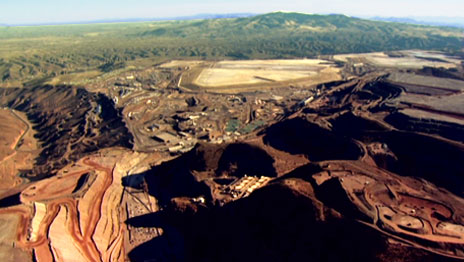
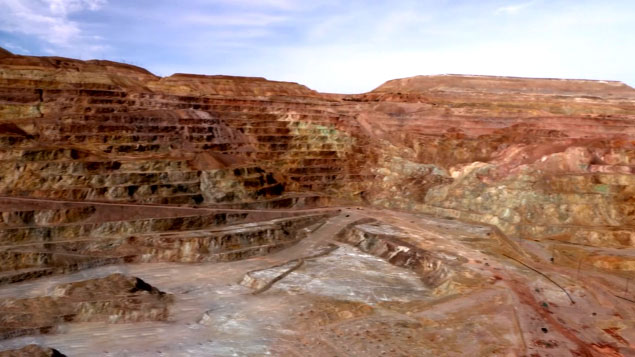
In the U.S. FCX operates seven open-pit copper mines — Morenci, Bagdad, Safford (including Lone Star), Sierrita and Miami in Arizona, and Chino and Tyrone in New Mexico; and two molybdenum mines — Henderson and Climax in Colorado. Molybdenum concentrate, gold and silver are also produced by certain of FCX’s U.S. copper mines.
Fort Madison, Iowa (Molybdenum Processing), El Paso, Texas (Copper Refinery and Rod Mill), and Miami, Arizona (Copper Smelter and Rod Mill) are FCX's downstream operations that process and refine raw materials into higher-value products for industrial and manufacturing markets.
FCX has significant undeveloped reserves and resources in the U.S. and a portfolio of potential long-term development projects. Future investments are dependent on market conditions and will be undertaken based on the results of economic and technical feasibility studies, including the incorporation of innovation initiatives to reduce capital intensity.

in Southeastern Arizona

 MORE VIDEOS
© 2026 Freeport-McMoRan
SOCIAL
RECOGNITION