


 BACK
BACKAmerica at 250: Freeport’s Mines Helped Forge U.S. History
 June 20, 2026 – As American patriots gathered in Philadelphia 250 years ago to declare independence from Great Britain, Spanish explorers were crisscrossing the continent’s southwestern deserts in search of metallic treasures.
Those early adventurers found gold and silver. They also found – often in far greater abundance – the metal that over time would prove to be the region’s real mother lode: copper.
From the revolutionary era to the modern age of electrification and artificial intelligence, copper has been essential to the economic health, security and innovative dominance of the United States. Almost since American independence was declared in 1776, the mines of Freeport have been a part of the nation’s history. More importantly, the company is well positioned to support future generations of America’s growth.
- Chino is the oldest mine in Freeport’s portfolio and traces its lineage to 1800, when the American Southwest was part of Spanish-controlled Mexico. Native Americans showed Spanish soldiers an area where they had historically collected copper. Within a few years, the Santa Rita del Cobre (Saint Rita of the Copper) mine was established in what would become New Mexico.
- The now-closed Freeport mine in Ajo was the first organized copper mining venture in Arizona after it became part of the United States in the 1840s.
- The Morenci mine had its foundations with the discovery of large copper deposits during the Civil War. It has grown into the largest copper mine in North America, and one of the largest in the world. Freeport’s lineage to American copper mining began in Morenci through Phelps Dodge Corp., which Freeport acquired in 2007.
- Now-shuttered operations like Bisbee and Jerome in Arizona were in their days among the richest in the nation.
 The quest to produce the copper that will be needed in the future continues with newer Freeport mines like Safford. The Arizona mine began production in 2007, and with its largely untapped Lone Star reserves, has the potential to grow into one of the company’s biggest producers in North America.
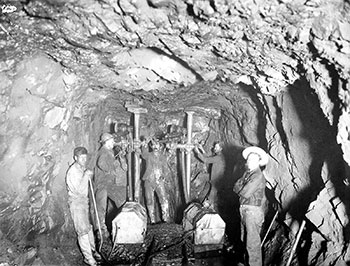
“Sometimes, I think our history gets lost in terms of how rich it is,” said Toby Dunn, Vice President-Morenci Operations. “It is pretty impressive when you think about these old timers with their pickaxes and their mule teams and their hand drills. The risks they took… Everything was underground. The living conditions were harsh. The hardships they went through to make a living... It took a different breed of person, and they laid the foundations for the mine we have today. It’s awesome, and we don’t celebrate it enough.”
Colonial copper
For hundreds of years before Europeans arrived in the Americas, natives mined copper for tools, weapons and ornaments. During colonial times in the east, copper was in abundance in everyday items like cookware, coins and construction hardware.
The weapons used by American revolutionaries relied on copper and copper-based alloys such as brass and bronze.
 As important as copper was to colonial America, its value was more practical than monetary, and so the colonies relied largely on imports from England even after the Revolution. There were some early copper mines in the Northeast and as far south as Tennessee.
After the United States was established with the ratification of the Constitution, the fledgling nation relied heavily on copper for its defense and global commerce.
Wooden ships of the day were prone to rot from exposure to water, shipworms and barnacles. To protect their hulls, builders began lining them with copper sheathing. Paul Revere, the famed Boston revolutionary, built the first commercially successful copper rolling mill in the U.S. in 1801 to supply copper sheathing and hardware for the first ships in the American Navy.
The first copper mining boom in the United States occurred in the upper peninsula of Michigan in the 1840s. Michigan and later Montana remained the largest copper producing states in the Union until the early 1900s when Arizona surpassed them.
Freeport’s mining foundations
Freeport’s direct lineage into the copper business began in Morenci.
 Signs of valuable metals in the area first drew the attention of a Union Army patrol about 1863. However, the area’s remoteness and dangers of Apache raids made mining there untenable. In 1870, three scouts from another Army patrol staked the area’s first mining claims.
Phelps Dodge Corp. entered mining in 1881 when it bought into the Detroit Mining Company, one of two mining companies to emerge in Morenci. Phelps Dodge was founded in 1834 as a cotton and metal trading firm based in New York and had no prior mining experience.
A month after the Morenci acquisition, Phelps Dodge purchased a mining company in Bisbee, which became one of the nation’s largest copper producing districts for a time. Over the next several decades, Phelps Dodge consolidated its ownership in Morenci and Bisbee and acquired mines in Jerome and Ajo.
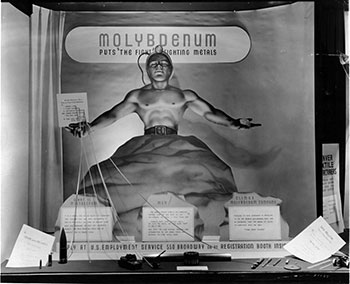
In 1999 Phelps Dodge acquired Cyprus Amax Minerals Company, including mines in Bagdad, Miami and Sierrita, Arizona; Cerro Verde mine in Peru; El Abra mine in Chile; and Climax Molybdenum in Colorado.
In 2007, Phelps Dodge was acquired by Freeport-McMoRan in what was then the largest mining acquisition in history.
History of innovation
Innovation has been a part of Freeport’s mines since the beginning.
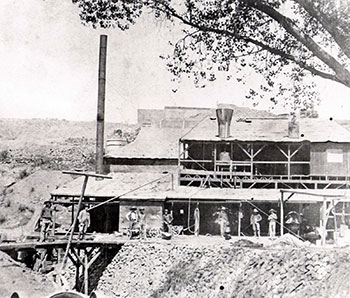
The first copper smelter in Arizona was built about 1874 in Clifton to process ore from the Morenci mines, and the state’s first copper concentrator was built there in the 1880’s.
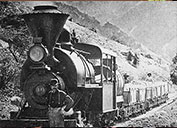
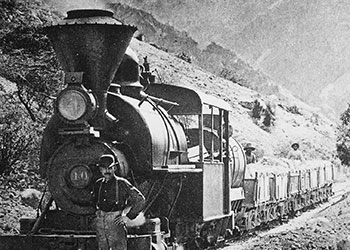
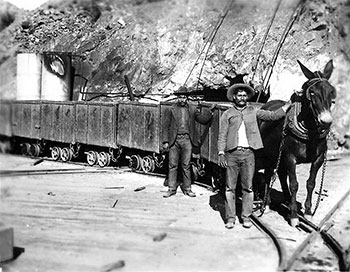 The first steam-powered industrial railroad in Arizona was built to haul ore from the Longfellow Mine in Morenci. Mining companies in the district built their own rail lines to connect to the main railroads, as they did in other Freeport-connected copper towns like Jerome.
Low copper grades at Ajo led to new leaching techniques developed beginning in 1912 and culminating five years later with the opening of a leaching plant and Arizona’s first open pit mine. That innovation continues today, with data-intensive research assisted by artificial intelligence through the company’s Leach to the Last Drop initiative.
One of the world’s first solvent extraction–electrowinning (SXEW) plants opened in Bagdad in 1970, and it remains the oldest continuously operated facility of its kind. The process now accounts for about 20 percent of all global copper production.
Today, Freeport is the industry leader in integrating new processes and technologies like automation, robotics, data analytics and coordinated remote operations through its Reinvent Mining effort.
“Whether Freeport or through the legacy of Phelps Dodge, we’ve always been early-stage adopters,” said Bert Odinet, Senior Vice President and Chief Innovation Officer. “We went from being fast followers to industry leaders and helped co-develop some of the technologies we’re seeing in play now. Our legacy of innovation allowed us to continue operating through more challenging times. If you benchmark our capabilities against others, we’re world class, and that’s because we’ve been forced to bypass historical norms through innovation.”
Photo (top to bottom): Early underground miners like these in Morenci worked long hours under dangerous conditions to produce the copper that helped the United States become the world’s economic powerhouse; An early smelter built to process ore from the Morenci mines is shown in this photo from the 1880s; This World War II-era display touts molybdenum’s contribution to the war effort; Steam engines replaced mule-drawn wagons at Morenci beginning in the late 1870’s; Mule-drawn carts were used to haul ore in the early days of Morenci.


© 2026 Freeport-McMoRan
SOCIAL
RECOGNITION